Choosing a filament is more than a question of colour. The material decides how stiff a part is, how it copes with heat, how long it lasts in sunlight and how easy it is to print. Here is a practical comparison of the three most common options, with their pitfalls and tips for buying with confidence.
Before you buy, remember that prices change from day to day and can differ between countries. The cards below show current prices. Delivery is not included in the price shown, so check shipping costs before you order. The Safqio guide explains how to buy from another European Amazon store if your project makes that worthwhile.
PLA: the sensible starting point
PLA is the most common material for beginners. It prints at moderate temperatures, sticks well to the bed and produces little smell. It is stiff and precise, which suits figurines, prototypes, decorative objects and parts that carry little load.
Its limits are clear. It softens around 55 to 60 °C, so it is a poor choice for a part left in a car on a summer day. It degrades over time under UV light and humidity, and it is brittle under sharp impact.
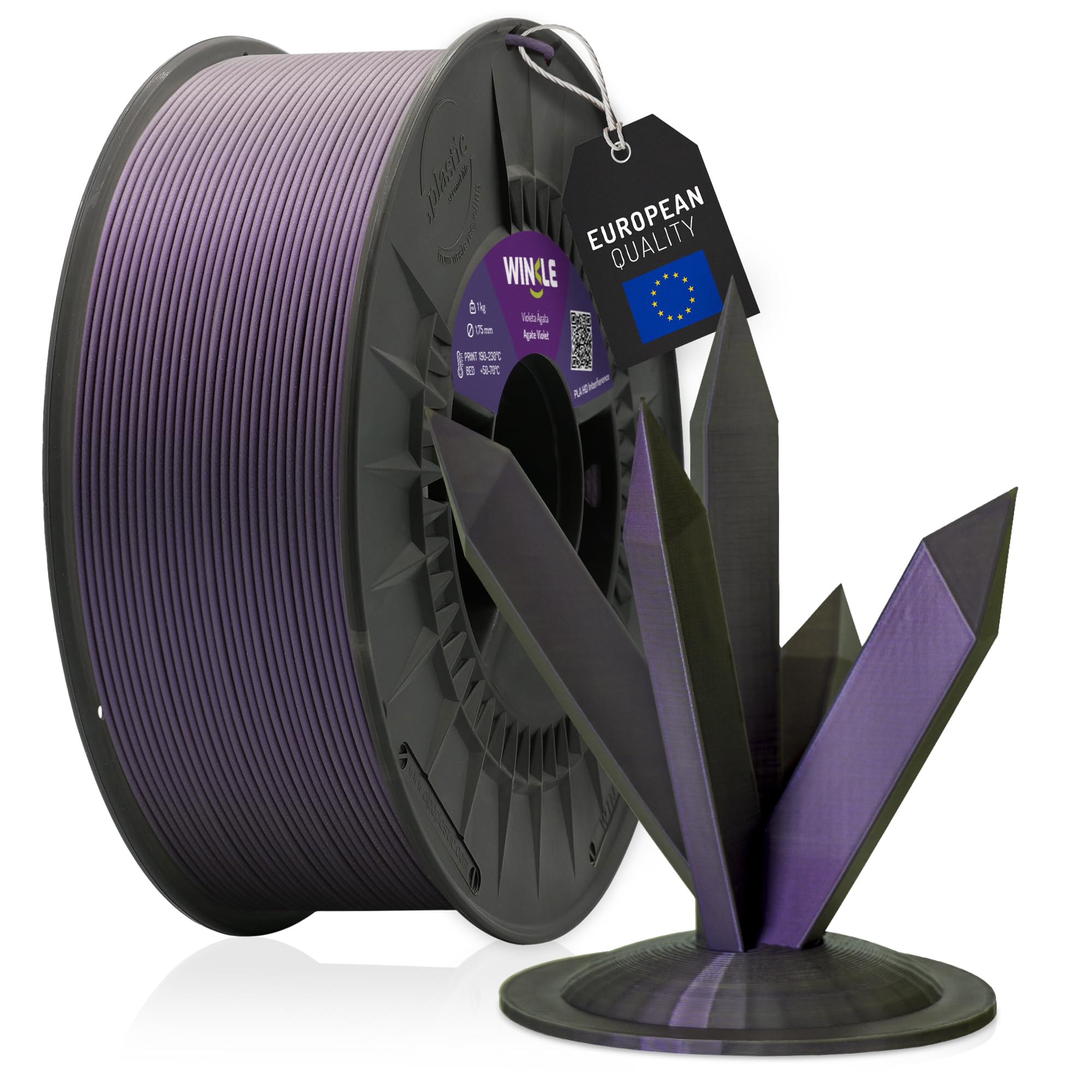
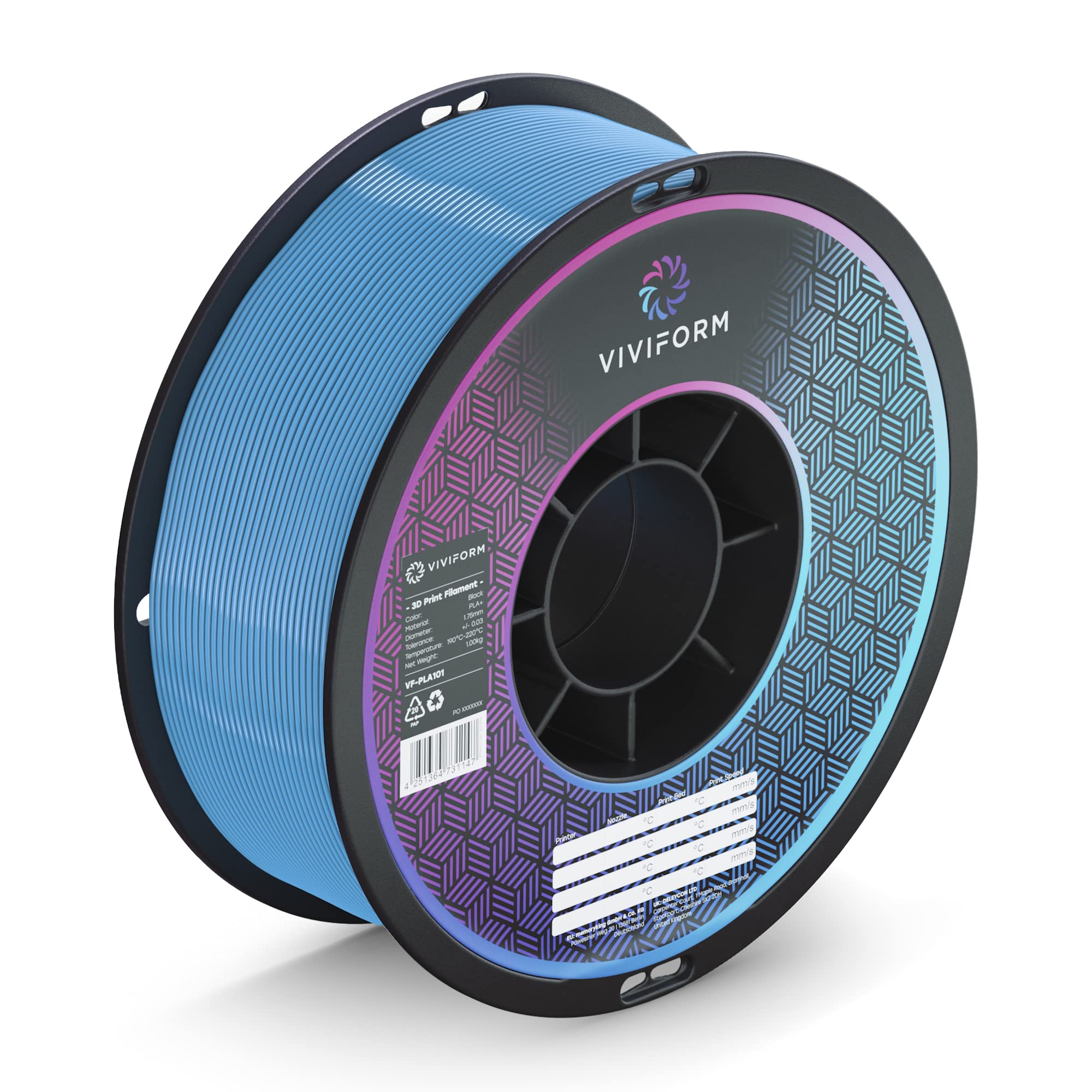
For a first purchase, a standard PLA spool is often enough. Variants labelled PLA+ or reinforced promise better strength, but the terms have no single definition, so read the listing carefully.
PETG: strength and moisture resistance
PETG combines good impact resistance, some flexibility and better heat tolerance than PLA, usually around 70 to 80 °C depending on the manufacturer. It handles humidity better, which makes it a good choice for functional parts such as holders, enclosures, covers and simple mechanical components.
Its main drawback is stringing, the thin strands that appear between parts of a print. Lowering the nozzle temperature a little, tuning retraction and keeping travel speed high all help. PETG also bonds strongly to the bed, so use a suitable surface to avoid tearing parts off when you remove them.
For occasional outdoor use PETG often beats PLA, but it is not a substitute for a material designed for long, intense UV exposure. Test on a small part first.
Food contact calls for caution. Do not treat any consumer filament as food safe unless the manufacturer provides certified information. Even then, a 3D print is porous, so avoid parts that touch food, especially hot or acidic food.
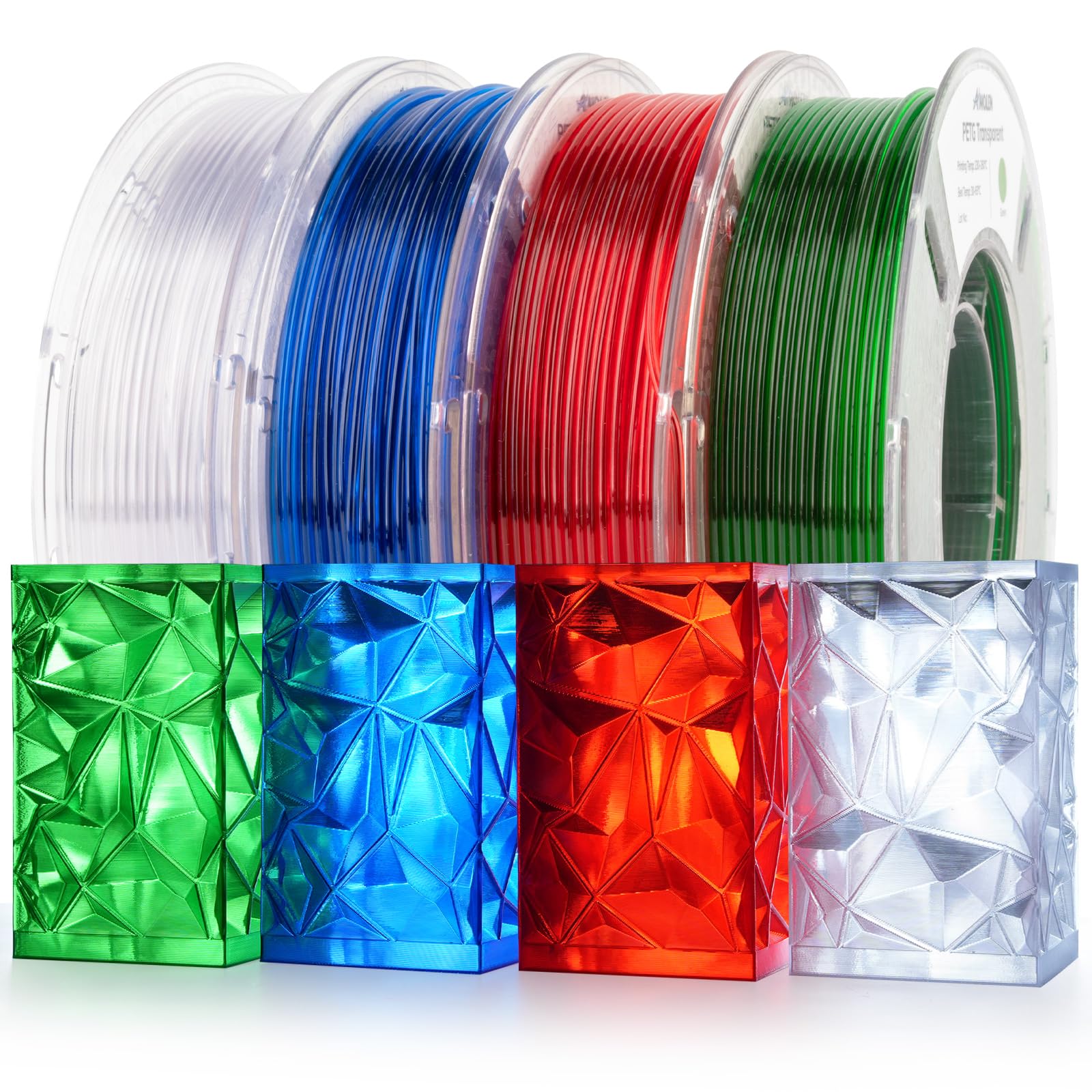
Multi-colour packs let you test several shades without buying many single spools. The AMOLEN pack below contains four 250 g spools, and its title mentions a light transmission feature.
For a single spool, here is another PETG option:

TPU: flexible and elastic
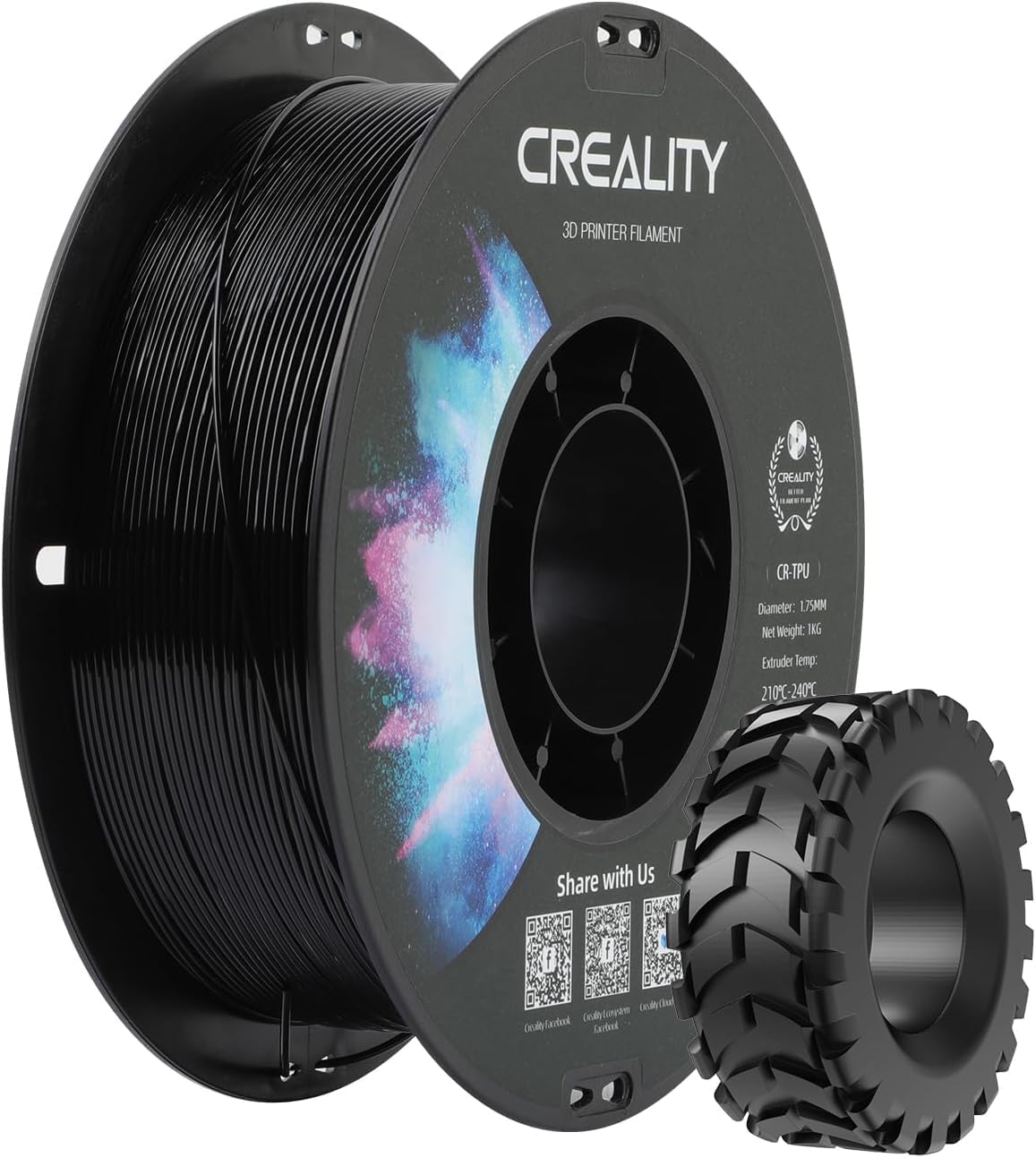
TPU is a flexible filament used for gaskets, protective covers, anti-slip feet and any part that must bend or absorb shock. Its softness is measured on the Shore hardness scale: the lower the number, the softer the part.
It prints more slowly than PLA or PETG. Because the filament is soft, it can buckle inside a Bowden tube. A direct-drive printer, where the motor pushes filament straight into the hotend, is much more reliable. On a Bowden machine, reduce the speed and check the tension of the feed gear.
TPU is not suited to rigid parts or to parts that must hold a precise shape under load.
Quick comparison
- Stiffness: PLA is the stiffest, PETG sits in between and is tougher, TPU is flexible.
- Heat: PLA is limited to about 55 to 60 °C, PETG is clearly better, TPU depends on the formulation.
- UV and outdoor use: none of the three is ideal without protection; PETG is often a reasonable compromise for moderate use.
- Ease of printing: PLA is simplest, PETG needs tuning, TPU needs patience.
- Food contact: avoid unless certified information is available, and remember that prints stay porous.
Starting settings and common mistakes
Use these as rough starting points and adjust them for your printer:
- PLA: nozzle around 190 to 220 °C, bed warm or cold.
- PETG: nozzle hotter than for PLA, bed around 70 to 80 °C, moderate cooling.
- TPU: reduced speed, nozzle usually between the PLA and PETG settings.
The manufacturer's datasheet always takes priority over these values.
Common mistakes include damp filament, a badly levelled first layer, untreated PETG stringing and printing TPU too fast. Store opened spools in a sealed box with desiccant.
Which material for which project
- Figurines and decoration: PLA.
- Functional parts exposed to a little heat or humidity: PETG.
- Gaskets, protectors and anti-slip feet: TPU.
- Long-term outdoor parts: none of the three without protection; assess case by case.
- Anything touching food: avoid without certified information.
Before ordering, check the seller, the shipping costs and the warranty terms, especially when buying from third-party sellers.